
2026.02.11
Starite (Sing Mas) Bridges Taiwan–Vietnam Circular Design Gap
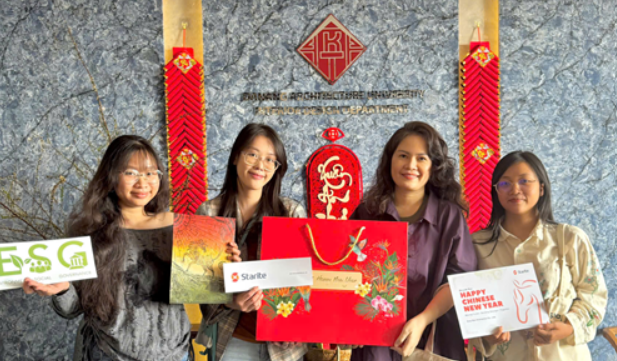
On January 6, the Starite team from Taiwan met with the Head of the Interior Design Department at Da Nang Architecture University
(DAU), marking an important step in Starite’s international circular-economy roadmap.
This visit officially initiated The Acrylic Cycle (TAC) — a Taiwan–Vietnam design partnership grounded in a shared belief: material surplus is not an endpoint, but a starting point for better design.
At Starite, industrial acrylic offcuts are not treated as waste. They are viewed as durable, high-quality, and recyclable resources with the potential to be redefined through thoughtful design, system thinking, and cross-cultural collaboration. TAC transforms these materials into a learning platform — one that connects industrial supply chains with creative education and future-ready applications.
The timing of this collaboration is particularly meaningful, aligning with DAU’s launch of its Recycled Waste Design curriculum. Together, we are creating a real-world design laboratory where students engage directly with industrial materials, sustainability principles, and global design challenges.
Beyond education, TAC represents a broader strategic vision. By linking Taiwan’s material innovation capabilities with Vietnam’s growing design ecosystem, Starite is building a cross-border green design network — one that supports circular thinking, responsible manufacturing, and long-term international collaboration.
This initiative reflects Starite’s evolution from a material manufacturer into a global solution partner, where sustainability, design, and cultural exchange move forward together. We sincerely thank the DAU faculty for their openness and shared commitment. TAC is not just a competition — it is a blueprint for how circular economy principles can scale across borders, industries, and generations.
This visit officially initiated The Acrylic Cycle (TAC) — a Taiwan–Vietnam design partnership grounded in a shared belief: material surplus is not an endpoint, but a starting point for better design.
At Starite, industrial acrylic offcuts are not treated as waste. They are viewed as durable, high-quality, and recyclable resources with the potential to be redefined through thoughtful design, system thinking, and cross-cultural collaboration. TAC transforms these materials into a learning platform — one that connects industrial supply chains with creative education and future-ready applications.
The timing of this collaboration is particularly meaningful, aligning with DAU’s launch of its Recycled Waste Design curriculum. Together, we are creating a real-world design laboratory where students engage directly with industrial materials, sustainability principles, and global design challenges.
Beyond education, TAC represents a broader strategic vision. By linking Taiwan’s material innovation capabilities with Vietnam’s growing design ecosystem, Starite is building a cross-border green design network — one that supports circular thinking, responsible manufacturing, and long-term international collaboration.
This initiative reflects Starite’s evolution from a material manufacturer into a global solution partner, where sustainability, design, and cultural exchange move forward together. We sincerely thank the DAU faculty for their openness and shared commitment. TAC is not just a competition — it is a blueprint for how circular economy principles can scale across borders, industries, and generations.
Contact our team to discuss your next office or co-working project.
www.starite-group.com